Eating the forbidden fruit
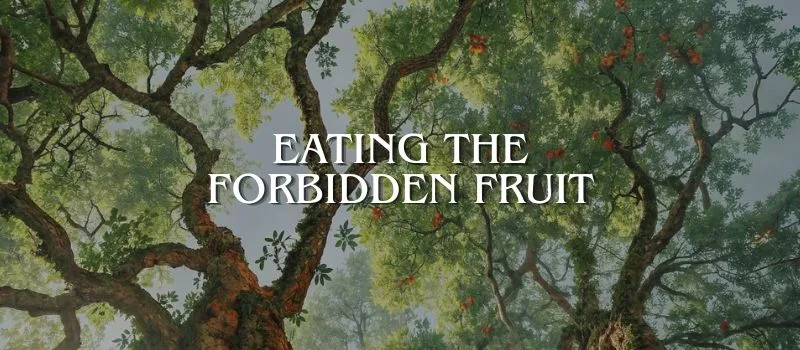
From the beginning, God knew everything. He knew what had been, what is, and what was yet to come. He knew the lies we have already told, the sins we have hidden, and even the mistakes we will still commit. So the inevitable question arises when we read Genesis: if He knew that Adam would fall, that Eve would be deceived, and that the serpent would be there, why did He place the tree in the garden?
This is one of humanity’s oldest questions. Some even ask: Was God inconsistent? Selfish? Did He create an unfair test?
But perhaps we are looking at the story through the wrong lens. The tree does not reveal a divine flaw; it reveals the depth of God’s love.
Love requires a choice
“And the Lord God commanded the man, ‘You are free to eat from any tree in the garden; but you must not eat from the tree of the knowledge of good and evil, for when you eat from it you will certainly die.”
Genesis 2:16-17
The presence of the tree reveals something fundamental: God created children, not robots. Love without the possibility of choice is not love—it is slavery. For obedience to have value, the possibility of disobedience had to exist.
In Deuteronomy 30:19, God declares, “Now choose life”. From the very beginning, the invitation has always been to choose. The problem is not the existence of the option, but the human decision to prefer what seems more attractive, easier, and immediate. The tree was there as a symbol of freedom. The fruit was not a trap, but proof that love is a daily decision.
The revelation of the heart
“The heart is deceitful above all things and beyond cure. Who can understand it?”
Jeremiah 17:9
Even knowing what is right, we are drawn to what seems pleasurable in the moment. The “butterflies in the stomach” of disobedience reveal our fragility. James 1:14–15 explains that each person is tempted when they are dragged away by their own evil desire and enticed. The problem was never the tree itself, but what already existed within the human heart.
Obedience means nothing until we are free to disobey. The tree stood between creation and the Creator, between heaven and hell, between submission and rebellion. God did not place it there to expose our fall, but to reveal our condition and, above all, to reveal His grace, mercy, and example of love.
Before the fall
“All inhabitants of the earth will worship the beast—all whose names have not been written in the Lamb’s book of life, the Lamb who was slain from the creation of the world.”
Revelation 13:8
Scripture declares that the Lamb was slain from the foundation of the world. Even before Adam ate the fruit, the cross was already part of the story. This means there was no surprise, no improvisation, and no divine mistake. But there was pain—because of betrayal and surrender.
Romans 5:19 says that just as through one man came disobedience, through another came obedience that brings life. The first Adam chose the fruit. The second Adam (Christ) chose the cross. Where there was a fall, there was also an even greater redemption.
The fruit was not love’s punishment; it was the price of freedom. God so loved the world that He gave His Son to suffer and redeem it. True love accepts the risk of rejection. The question was never why God planted the tree. The real question remains: Why do we still choose to eat from it?
If I love, I choose to remain. If I love, I choose to obey and walk with Him above all else.
God’s love has never been fragile. He is so holy and so pure that He endured the possibility of betrayal so that we could freely choose to return to Him.

by
Rapha Abreu is a journalist and cultural producer, and part of the marketing, writing and content production team at Mr. Rocco.