
Disobedient religion
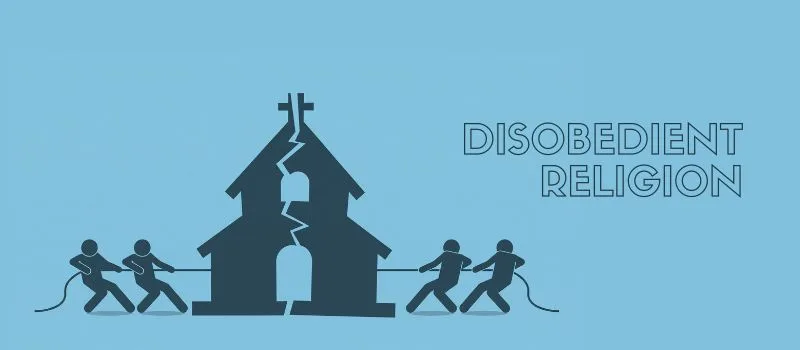
There is a profound difference between living a true faith and merely fulfilling a religious agenda. We can be present at services, know doctrines, participate in activities, and yet keep our hearts distant from what God truly desires from us. Religiosity inspects more than it obeys.
The local church is important. Walking with brothers and sisters, serving, gathering, and belonging to a faith community are part of Christian life. But there is a danger when we start to treat attendance at worship as the main measure of our faithfulness, while neglecting the love, justice, responsibility, and care that should accompany our lives every day.
Physical presence in the temple does not prove God's presence in your life. Agenda is not essence. And being a judge of those who live differently from you is even further from what it means to be a temple. We were not called to turn worship into a simple schedule or to measure the faith of others by our own agenda.
To inspect or to obey?
"Woe to you, scribes and Pharisees, hypocrites! For you pay tithe of mint and anise and cummin, and have neglected the weightier matters of the law: justice and mercy and faith. These you ought to have done, without leaving the others undone."
Matthew 23:23 (NVI)
Jesus confronted extremely religious people. They knew the Scriptures, followed rules, and were careful with details of religious practice. But, at the same time, they neglected what was most important: justice, mercy, and faithfulness.
It is possible to do everything the “Christian agenda” expects and still fail to live like Christ. We can talk about service in the church and neglect the responsibilities God has placed in our hands in our daily routine. Religiosity is often more comfortable when it can inspect the behavior of others than when it needs to confront its own heart.
Jesus also directly confronted those who honored God with their lips, but kept their hearts distant:
"This people honors Me with their lips, but their heart is far from Me."
Matthew 15:8 (NVI)
We rigidify worship into a specific day and time. We may believe that fulfilling an agenda is the same as living a life with God. But the church gathering is a means, not the ultimate goal. No agenda can replace a life of worship.
To be a temple
"Do you not know that you are the temple of God and that the Spirit of God dwells in you?"
1 Corinthians 3:16 (NVI)
We need the temple. We need to gather, walk with our brothers and sisters, hear the Word, serve, and live as a family. Christian faith was not meant to be lived in isolation. There is something precious in the gathering of God's people, in fellowship and collective worship.
But we need even more to become a temple. Physical presence in a building does not guarantee a life inhabited by God. We can be in a place of worship without truly surrendering our hearts to the Lord. Therefore, true worship cannot be restricted to an address, a day, or a time. It needs to encompass the totality of our lives.
"Therefore, brothers, I urge you by the mercies of God to present your bodies as a living sacrifice, holy and acceptable to God, which is your reasonable service."
Romans 12:1 (NVI)
True worship is non-negotiable and indispensable in our lives. It happens when we surrender to God our thoughts, decisions, relationships, work, responsibilities, and choices. Worship continues after the meeting ends. It continues when no one is looking.
We need to love the intention behind the gathering more than simply its format. The purpose of gathering is to meet God, hear His Word, love our brothers and sisters, and be transformed to live like Christ. When the format becomes more important than the essence, we run the risk of defending the structure while forgetting the purpose.
Worship continues
"Therefore, as we have opportunity, let us do good to all, especially to those who are of the household of faith."
Galatians 6:10 (NVI)
Worship does not end when we leave the church building. Adoration continues in the way we fulfill our responsibilities. Every environment becomes an opportunity to reveal the character of Christ.
Often, failing a responsibility that God has placed directly in our hands can reveal much more about our heart than missing a religious commitment.
Do not abandon the church. Do not stop walking with your brothers and sisters. Do not despise fellowship, gathering, and service. But also, do not allow the day of worship to become the only time you try to live as a Christian.
Because, in the end, the real question is not just whether you were in church, but whether Christ was present in the way you lived after you left it. It is not enough to honor God with your lips while your heart remains distant. True worship does not fit into an agenda. It needs to overflow into all of life.

by
Rapha Abreu is a journalist and cultural producer, and part of the marketing, writing and content production team at Mr. Rocco.