Bible OfflineBible OfflineDownload free
Back to the blog

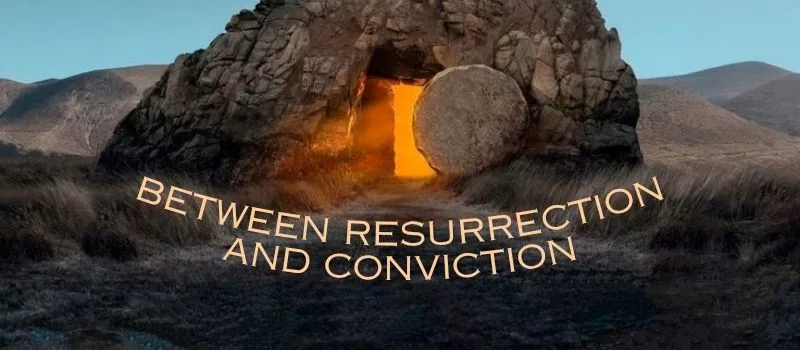
Between resurrection and conviction
by Rapha Abreu··3 min read
0
Share:
Between resurrection and conviction

The resurrection of Jesus was not merely an isolated event, but the beginning of a profound transformation in the lives of the disciples. The week following Easter Sunday reveals a process of understanding, faith, and restoration. In that interval, we see how God works in the human heart, even amid doubt, fear, and uncertainty.

From confusion to revelation

In the first days after the resurrection, the disciples were deeply shaken. Even with the empty tomb, they still did not fully understand what had happened. The pain of the crucifixion was still fresh, and hope seemed fragile. It was in this setting that Jesus began to reveal Himself in a personal and intentional way.

In John 20:14–16, Mary Magdalene encounters Jesus, but initially does not recognize Him. It is only when He calls her by name that her eyes are opened. This shows us that the risen Christ continues to reveal Himself in an intimate and personal way. Likewise, in Luke 24:30–31, the disciples on the road to Emmaus only recognize Him at the breaking of bread, a gesture that points to communion and spiritual revelation.

These encounters show that faith is born not merely from external evidence, but from a living relationship with Christ. He draws near, speaks, and allows Himself to be known.

Between fear and faith

Even after testimonies of the resurrection, the disciples were still afraid. John 20:19 recounts that they were gathered with the doors locked “for fear of the Jews.” The resurrection had not yet produced in them a firm faith — it was a process still being built.

Jesus then appears in their midst and declares: “Peace be with you.” This greeting is not merely a salutation, but a spiritual release. He shows them His hands, His marks and scars, proving that it was truly Him. Faith begins to be built not by the absence of doubt, but by an encounter with the truth.

This moment reveals something profound: God does not reject hearts that are in doubt. He draws near, reveals Himself, and strengthens. He knows our human weakness. The disciples’ faith was not born perfect, but was shaped by the constant presence of Jesus.

From doubt to a declaration of faith

The pinnacle of that week occurs eight days later, when Jesus appears again — this time with Thomas present. In John 20:27–28, Jesus invites Thomas to touch His wounds, directly confronting his unbelief. Thomas’s response is one of the most powerful declarations in Scripture: “My Lord and my God!”

Thomas represents all those who struggle to believe without seeing. His journey shows that sincere doubt can lead to deep faith when confronted with the truth of Christ — when there is a decision in the heart to truly believe. Jesus does not reject him, but leads him to revelation.

Jesus then declares: “Blessed are those who have not seen and yet have believed” (John 20:29). This statement points to all of us. Christian faith is not based on physical sight, but on trust in the Word and in the testimony of the living Christ.

The week after the resurrection was not merely about appearances, but about transformation. Jesus did not only conquer death — He restored hearts, strengthened faith, and established a new spiritual reality. This same Christ continues to reveal Himself today, leading each one of us from fear to faith, and from doubt to conviction.

Rapha Abreu

by

Rapha Abreu

Rapha Abreu é Jornalista e Produtora cultural, e faz parte da equipe de marketing, redação e produção de conteúdo da Mr. Rocco.

Comments

Be the first to comment.

Read next

The right place
·Rapha Abreu

The right place

Throughout life, we are constantly called to make choices. Some seem obvious, attractive, and full of opportunities. Others require faith, patience, and trust in God. The problem is that not everything that looks good to our eyes is truly what is best for our future. The Bible shows us this through the story of Abraham and Lot, a narrative that remains extremely relevant for everyone who desires to live according to God’s will. Appearances can be deceiving “Lot looked around and saw that the whole plain of the Jordan toward Zoar was well watered, like the garden of the Lord, like the land of Egypt. (This was before the Lord destroyed Sodom and Gomorrah.)” Genesis 13:10 There came a time when Abraham’s and Lot’s flocks had grown so much that the land could no longer support them together. To avoid conflict, Abraham proposed that they separate and gave Lot the opportunity to choose first where he would go. Lot saw a place that, from a human perspective, seemed like the perfect choice. The plain was fertile, abundant, and promising. Everything pointed to prosperity. But Lot evaluated only what he could see. He observed the appearance of the land but ignored […]

Read more
Prayer: Running from religious fear
·Rapha Abreu

Prayer: Running from religious fear

In the previous text, we talked a little about religious OCD and how it takes our focus away from what Christ truly expects from us. Today, I want to invite you to pray with me about this subject, so that we may feel free in the Father’s presence, seeking Him with love, gratitude, and true peace. You do not need to pray exactly as I will write here. Open your heart genuinely to God. But it will be a pleasure to accompany you in this moment of prayer and seeking. Prayer Father, I know that many times my mind is filled with fear, guilt, and thoughts that steal the peace of my faith. I know that You do not want me to live imprisoned by spiritual anxiety, constantly trying to earn a love that was already given to me on the cross. Teach me to rest in You and to remember that Your love is not sustained by my performance, but by Your infinite grace. When intrusive thoughts come, when the fear of condemnation tries to dominate my heart, and when I feel spiritually overwhelmed, help me remember Your truth. Your Word says that I was not given a spirit […]

Read more
Religious OCD: Fear that distorts faith
·Rapha Abreu

Religious OCD: Fear that distorts faith

Spiritual life should be a place of peace, hope, and relationship with God. But for some people, faith ends up becoming a constant source of fear, guilt, and anxiety. The so-called “religious OCD” is a manifestation of obsessive-compulsive disorder linked to morality, sin, and spiritual issues. Often, those who suffer from it don’t realize they are facing a disorder. The person believes they are simply “seeking God more,” when in reality, they live trapped in cycles of fear, intrusive thoughts, and compulsions that steal the freedom of faith. Faith generating fear “For the Spirit God gave us does not make us timid, but gives us power, love and self-discipline.” 2 Timothy 1:7 Religious OCD usually manifests itself through obsessive thoughts related to sin, condemnation, blasphemy, or a constant fear of displeasing God. These thoughts are unwanted but arise repeatedly, causing intense distress. Many people spend hours repeating prayers, asking forgiveness countless times for the same issue, or mentally reviewing their actions, trying to figure out whether they have sinned or not. The problem is not in prayer, faith, or the pursuit of holiness; it lies in the extreme fear and anxiety that dominate the relationship with God. True faith draws […]

Read more