


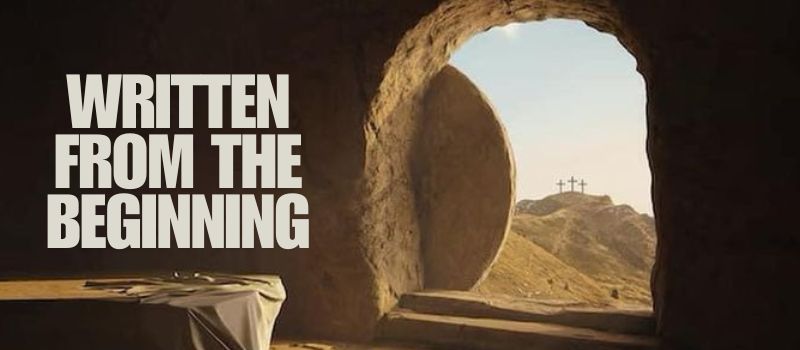
Easter is not just an isolated celebration on the Christian calendar that appeared out of nowhere. It is the fulfillment of a promise that runs throughout the entire Bible. From the very beginning, God had already established a plan of redemption, revealed little by little over the course of history.
Christ came to save us and gave Himself for us, even though we did not deserve it. His coming was not by chance, and His death was not an accident, but the center of a carefully crafted divine narrative, where every detail pointed to the perfect sacrifice.
Pointing to the Messiah
Long before the cross, God was already revealing, through symbols and events, what would later be fulfilled in Jesus. One of the most striking examples is the sacrifice of Isaac.
“Take your son, your only son Isaac, whom you love…”
(Genesis 22:2)
Just as Isaac carried the wood for the sacrifice, Jesus would carry the cross. However, unlike Isaac, Christ was the Lamb who truly gave Himself. There, God had already shown that He would provide the perfect sacrifice.
Another powerful example is Joseph, who was sold for silver and rejected by his brothers.
“They sold Joseph for twenty pieces of silver…”
(Genesis 37:28)
Just as Joseph was betrayed and later became an instrument of salvation, Jesus was also handed over, rejected, and yet brought redemption to the world. He forgave His brothers and received them as His family.
The revealed suffering
The Bible does not only present symbols, but also clear prophecies about the suffering of the Messiah. The prophet Isaiah describes with remarkable precision what Jesus would experience centuries later.
“He was despised and rejected by men…”
(Isaiah 53:3)
The so-called “suffering servant” reveals a Messiah who would not come with earthly glory, but with pain, surrender, and sacrifice. Every detail points to the cross and to the love that sustains this act.
Another striking sign is found in the story of Jonah.
“Jonah was in the belly of the great fish three days and three nights…”
(Jonah 1:17)
Jesus directly refers to this event, showing that just as Jonah was in the fish, He too would remain for three days before rising again. Nothing was by chance; everything was part of a perfect plan.
The fulfillment of the promise
In the Jewish Passover, the blood of the lamb marked the houses so that death would not strike the firstborn. This event in Egypt already pointed to something much greater.
“The blood shall be a sign for you… and when I see the blood, I will pass over you.”
(Exodus 12:13)
The lamb had to be without blemish—pure and perfect. This requirement was not merely ritual; it was prophetic. Jesus is the fulfillment of this image: the spotless Lamb who takes away the sin of the world.
“Behold, the Lamb of God, who takes away the sin of the world.”
(John 1:29)
From the numbers to the details, from the days to the events, everything pointed to Christ. God has always been the same, faithful to His promises. The cross was not the end, but the proof that He fulfills everything He says.
Easter reminds us that nothing escapes God’s control.
Every detail of history reveals His love and His faithfulness. And today, just as in that time, all the answers we seek are still found in Him and in His Word.


